SCRIPT
TTS script preparation
We prepare approved text, expand abbreviations and agree how numbers, dates and units should be read. We divide scripts into segments linked to slides, scenes or files so that later corrections are easy to identify.
03 / Audio / TTS
Multilingual AI voiceover for training videos, e-learning, presentations and instructions. We produce TTS audio from approved scripts through to final files.
We support LSP teams with synthetic voice production and audio localization. We adapt the workflow to the language, content, target duration and quality requirements; your team approves the wording and pronunciation.
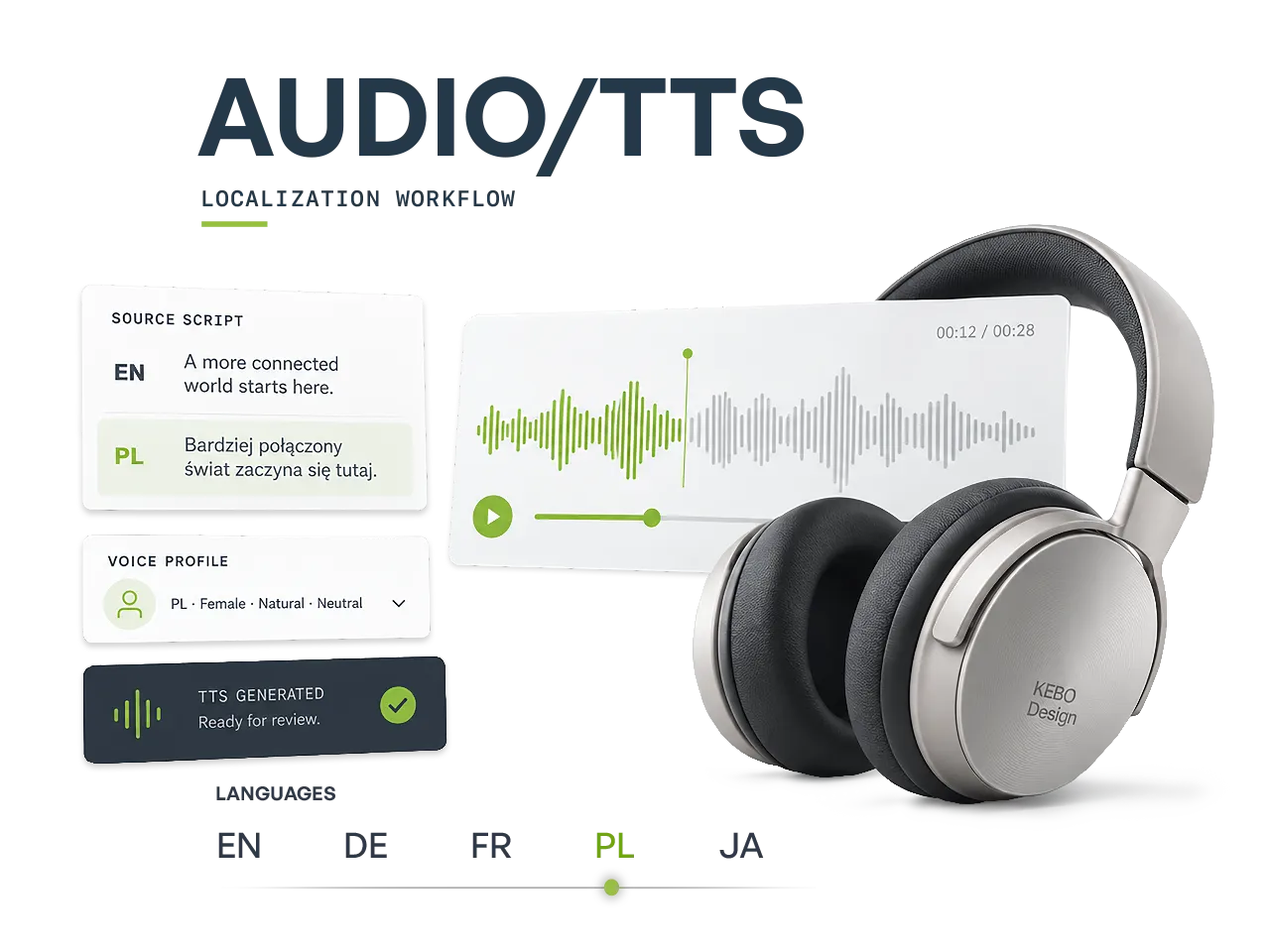
Scope of support / Audio / TTS
Text-to-speech speeds up the production of additional language versions, but requires careful work on scripts, intonation and editing. We combine AI voice generation with audio editing and recording checks.
We prepare approved text, expand abbreviations and agree how numbers, dates and units should be read. We divide scripts into segments linked to slides, scenes or files so that later corrections are easy to identify.
We prepare AI voice samples suited to the language, tone and audience. We agree on pace, narration style and expression. The approved sample serves as the reference for production and subsequent recording checks.
We create a pronunciation guide: names, abbreviations and difficult terms are written in a way that helps the AI TTS voice pronounce them correctly. For example, we can use “kay-pee-eye” for “KPI” if needed. We check pronunciation in a sample with your SME.
We generate audio in ElevenLabs or another agreed TTS environment. We adapt settings and script preparation to the capabilities of the selected model. Production is organized in controlled batches to maintain a consistent narration style.
We edit recordings, adjust pauses and loudness, remove unwanted sections and prepare versions that meet the specification. For videos and courses, we check segment lengths against the visuals and the time available to present the content.
We listen for omissions, repetitions, artifacts and departures from the script. Language queries are submitted for approval. We deliver organized WAV/MP3 files or other agreed formats with version information.
How we work together
We adapt the scope to your project. Your team makes linguistic and subject-matter decisions, while KeboDesign handles the agreed production and technical checks.
Hover, focus or click to highlight the selected team’s responsibilities.
You provide the script and source video or audio for a quote, together with languages, duration, preferred style and technical requirements.
We analyze the production scope, number of files and synchronization needs. We agree the cost, schedule and approval stages.
You approve the voice, pace and pronunciation of names and terminology. You supply the target translations.
We prepare representative samples and flag pronunciation queries. We adapt the script for TTS generation.
You confirm the final wording before production and answer language queries.
We generate recordings, edit audio tracks and fit segments to the video or course. We retain agreed file names and identifiers.
Your language reviewer or SME checks the wording, pronunciation and pace in Frame.io. The video preview provides visuals and narration, with comments linked to specific moments.
We share a review version in Frame.io, collect approved feedback and correct the relevant TTS segments. We check consistency with the remaining audio and visuals.
You approve the recordings and final delivery specification.
We check file completeness, script accuracy, formats and audio levels. We deliver the approved language versions.
Pronunciation approval
In specialist videos and courses, a product name or abbreviation can matter more than an impressive voice. We therefore check selected terms in a sample before generating the full audio set.
The reviewer approves the content and pronunciation guide. TTS-specific spelling is kept separate from the text published in subtitles. We share audio or narrated video in Frame.io so that your SME can assess pronunciation, context and synchronization and easily add comments.
A translation longer than the source does not have to mean unnaturally fast narration. First, we ask for the wording to be shortened without losing meaning. If that is not possible, we assess whether a section of the source video, a title card or a pause can be extended to allow a natural speaking pace. Feasibility depends on the actual material.
Deliverables / Audio / TTS
We agree formats and the final delivery scope in the brief. Your team receives approved deliverables with a clear handover.
Audio tracks after editing, checks and linguistic approval. Parameters and file structure are adapted to their intended use.
WAV / MP3 · agreed specificationsRecordings linked to scenes or slides, together with approved text. Changes can be identified by segment ID.
Scripts · identifiers · versionsDuration, pauses and editing tailored to the video or course. Integration with the source is included where agreed.
Audio tracks · synchronization · QAMaterials for a quote
Questions / Audio / TTS
The recording approach depends on the content, desired expression and client requirements. We start with a sample so that you can evaluate the AI voice in the context of your project.
Yes. An approved translation adapted for recording is essential: it should sound natural and remain as close as practical to the source length. This helps narration fit the scenes without excessive acceleration. We handle TTS script preparation, samples, editing and technical checks; any necessary shortening is agreed with your team.
We identify difficult names and abbreviations, prepare samples and collect feedback from your reviewer or SME. We apply the agreed rules throughout production and verify them by listening.
Yes, provided we have approved wording and a segment that can be isolated. After editing, we check joins, pace and consistency with the rest of the recording.
Usually WAV or MP3 with agreed specifications. We adapt file structure, naming and delivery to the video, Storyline project, LMS or other environment.
Script length, number of languages and files, pronunciation requirements, editing and revision rounds. We agree any voice usage and platform costs before production.
Contact / Audio / TTS
Send a sample or a link to your materials. We will define requirements, delivery formats and the information needed for a quote.
Go to the contact page ↗AI TTS narration can support standalone audio and videos embedded in a course. Quality depends on more than the voice and script: sample approval, consistent pronunciation and review in the training context also matter.
Read the guide ↗